INDIA
INDIA
 USA
USA CANADA
What Is an MCP Server? The Future of Secure AI Integration with Model Context Protocol
11/03/2026
If you have ever wondered why AI models, despite being incredibly powerful, still struggle to directly access your business tools, databases, or real-time data, you are not alone. The answer lies in a missing bridge, and that bridge is now here. So, what is an MCP server? An MCP server is a specialized component built on the Model Context Protocol (MCP), an open standard designed to connect AI models with the external systems, tools, and data sources they need to function in the real world. Think of it as the universal connector that finally makes AI practical for enterprise environments.
The numbers tell a compelling story. According to recent industry research, over 74% of enterprises report that AI adoption is slowed by poor integration with existing business systems. Meanwhile, Gartner projects that by 2027, more than 50% of enterprise AI applications will rely on some form of agentic architecture. MCP sits right at the center of this transformation. With major organizations like Anthropic, IBM, and several Fortune 500 technology firms actively adopting MCP as the model context protocol standard for AI agents, the momentum is undeniable.
Contact us now
What is an MCP Server? Secure Ai Integrating Guide
What Is an MCP Server?
A Model Context Protocol server, or MCP server, is a software component that exposes tools, datasets, or services to AI models using a standardized communication protocol. In simple terms, it acts as a bridge between an AI application and an external system, whether that is a database, a CRM platform, a project management tool, or a communication service like Slack. Instead of building custom integrations for every tool, developers can deploy MCP servers that speak a common language, making AI integration cleaner, faster, and far more scalable.
Common examples of MCP servers in action include:
- MCP database server: Gives AI models read or write access to structured enterprise data
- CRM MCP server: Allows AI to fetch, update, or analyze customer records automatically
- GitHub MCP server: Enables AI agents to read code repositories, create issues, and review pull requests
- Slack MCP server: Lets AI send messages, summarize conversations, or trigger notifications
Understanding what is an MCP server is the first step toward unlocking a fundamentally more powerful AI strategy for your business. The server does not just pass data. It interprets what the AI needs, fetches it securely, and returns structured results that the AI can actually act on. That is what makes MCP servers so valuable in real enterprise deployments.
Model Context Protocol Explained: The Universal Standard for AI Tool Integration
The Model Context Protocol (MCP) is an open standard originally introduced by Anthropic that defines how AI models communicate with external tools, APIs, and data sources. Often described as a universal AI tool integration protocol, MCP gives developers a consistent framework to expose any service to an AI model without writing one-off integrations each time. It is quickly becoming the mcp standard for ai agents across the industry, with support growing from developer communities, enterprise software vendors, and AI research labs alike.
Key reasons why MCP matters:
- It reduces custom integration work by up to 60%, according to early adopter reports
- It provides a secure, permissioned way for AI to access real-time enterprise data
- It supports the context model that AI agents need to make informed, dynamic decisions
- It is vendor-neutral and designed to work across different AI platforms and model providers
Model context protocol news has been spreading fast across the AI development community. IBM has highlighted MCP as a key protocol for enterprise AI, and developers on platforms like GitHub and Hugging Face are actively contributing to the growing MCP ecosystem. The pace of adoption reflects a broader shift: enterprises no longer want AI that works in isolation. They want AI that works with everything.
MCP Architecture Unpacked: How the Protocol Actually Works
The MCP architecture is built on three core components that work together to give AI models safe and structured access to external tools. Understanding this architecture helps you appreciate why what is an MCP server is such an important question for any business planning an AI strategy. Here is how the pieces fit together in a standard MCP diagram flow:
- Host Application: This is the AI assistant, chatbot, or platform that the user interacts with, such as Claude, a custom enterprise AI agent, or an internal AI-powered tool
- MCP Client: This component lives within the host application and is responsible for sending structured requests to MCP servers on behalf of the AI model
- MCP Server: This is the external component that receives requests, interacts with the relevant tool or dataset, and returns results back to the AI
The complete flow looks like this:
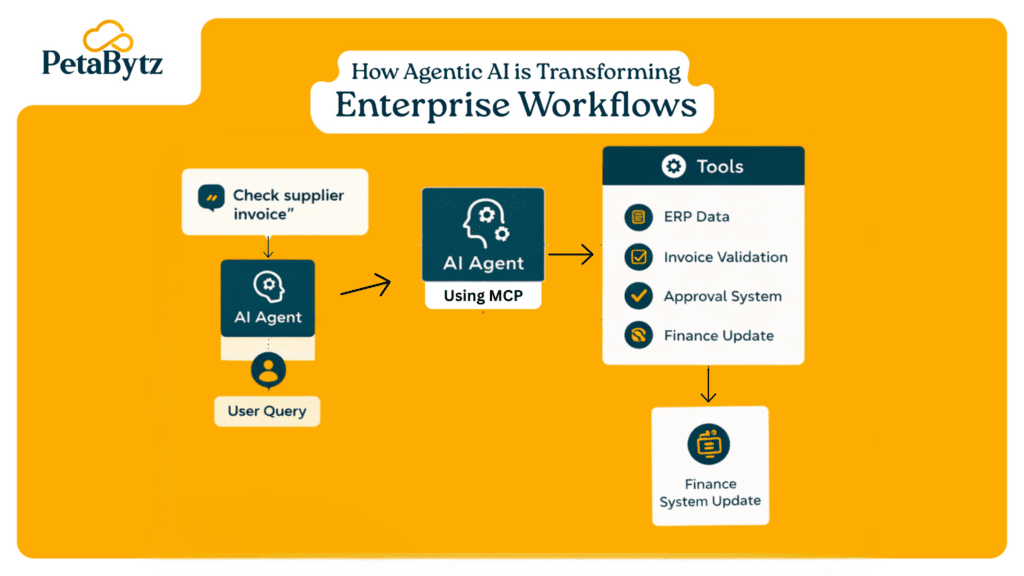
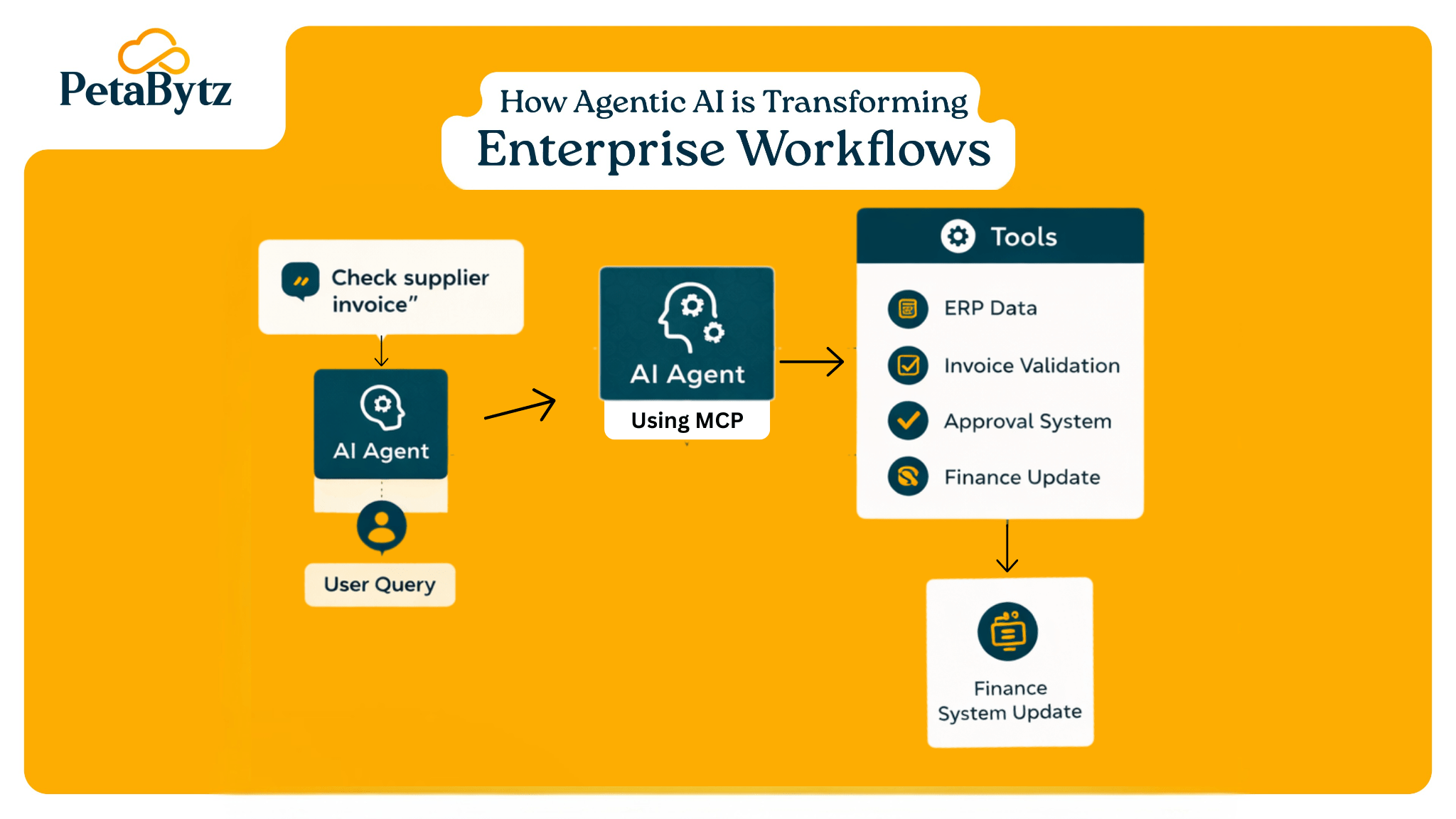
User Request > AI Agent > MCP Client > MCP Server > External Tool or Data > Structured Response > Back to User
MCP Agentic AI: How MCP Powers the Next Generation of Autonomous AI Agents
One of the most exciting developments in the MCP landscape is its role in enabling mcp agentic ai, where AI models do not just respond to prompts but actively plan, reason, and execute multi-step tasks across multiple systems. This is where MCP goes far beyond a simple API connector. With MCP, an AI agent can dynamically discover what tools are available, decide which ones to use, and coordinate complex workflows without human input at every step.
MCP agentic capabilities include:
- Dynamic tool discovery: AI agents can query MCP servers to learn what tools are available in real time
- Multi-step planning: AI agent mcp setups let agents break down complex goals into individual tool-based actions
- Autonomous execution: Agents can carry out workflows from start to finish without constant user oversight
- Context 7 mcp and similar frameworks extend MCP capabilities into specialized domain applications
The combination of MCP and agentic AI represents a genuine leap forward. It moves AI from being a reactive tool to becoming an active participant in business operations. At PetaBytz Technologies, we see this shift every day in the enterprise projects we support, where AI agents are handling tasks that previously required entire teams.
Autonomous AI Workflows in Action: A Real-Life MCP Use Case You Need to See
To make this tangible, let us walk through a real-world example of what is an mcp agent doing in an enterprise IT support scenario. This kind of autonomous AI workflow is already being deployed by forward-thinking companies and shows just how practical MCP has become.
AI IT Support Agent Workflow using MCP servers:
- Step 1: An employee reports a software issue to the company AI assistant via chat
- Step 2: The AI agent queries the knowledge base MCP server to find relevant solutions
- Step 3: If no solution is found, the agent contacts the helpdesk MCP server and creates a support ticket automatically
- Step 4: The Slack MCP server sends an instant notification to the appropriate IT team member
- Step 5: The AI continuously monitors the ticket status and sends updates to the employee without any manual follow-up
This entire sequence happens autonomously, with the AI agent coordinating multiple MCP servers simultaneously. It is not a demo or a prototype. It is the kind of real deployment that reduces IT response times by over 40% and frees up human teams for higher-value work. That is the power of what is an MCP server when it is put to work in a properly designed AI architecture.
MCP for Enterprise AI: Why Leading Organizations Are Moving Fast
Enterprise adoption of MCP is not just a technical trend. It is a strategic decision. Companies that implement MCP for enterprise AI gain a significant competitive edge because they can build AI systems that are scalable, interoperable, and secure by design. The custom foundation machine of MCP means enterprises are not locked into any single vendor or platform. They can build, expand, and modify their AI capabilities as their business grows.
Core enterprise benefits of MCP server adoption:
- Standardized AI integrations: No more fragile custom connectors for every tool in your stack
- Faster workflow automation: Deploy intelligent automations across departments in weeks, not months
- Secure data access: MCP uses permissioned, auditable access so your enterprise data stays protected
- Scalable infrastructure: The MCP ecosystem drawing continues to grow with new server types added regularly by the community
- Interoperability: Works across multiple AI models and platforms, giving you flexibility over time
The organizations moving fastest with MCP are those that already understand the value of scalable AI infrastructure. They see MCP not just as a technical protocol but as an organizational capability. Those who adopt it early will set the standard for how enterprise AI gets built over the next decade.
Powerful Business Impact
What MCP-Powered Agentic AI Means for Your Bottom Line
The business impact of MCP goes well beyond IT. When you combine what is an MCP server with a well-designed mcp agentic ai strategy, you start to see measurable gains across the entire organization. Operations teams save hours every week through automated workflows. Customer support teams resolve issues faster because AI agents can access real-time data through MCP servers. Software development teams ship code more efficiently because AI agents can read repositories, run checks, and flag issues automatically.
Business areas transformed by MCP-powered AI:
- Operations automation: AI agents manage scheduling, approvals, and reporting with minimal human input
- Customer support systems: AI resolves tier-1 queries instantly using live data from CRM and helpdesk MCP servers
- Software development workflows: Agentic AI reviews code, generates documentation, and tracks bugs autonomously
- Business intelligence processes: AI pulls data from multiple sources through MCP servers and delivers real-time insights
These are not theoretical outcomes. They are real results being achieved by companies that have made MCP a core part of their AI architecture. The protocol handles the complexity so your teams can focus on decisions and outcomes, not plumbing.
Who Created MCP and What You Should Know About Its Origins
Model Context Protocol was created by Anthropic, the AI safety company behind the Claude family of AI models. Anthropic released MCP as an open standard in late 2024 with the goal of making AI more useful in real-world settings by giving models structured, secure access to the tools and data they need. Since its release, the MCP logo has become recognizable across developer communities, and model context protocol news has spread rapidly as companies experiment with MCP server deployments in production environments.
Key facts about MCP’s origin and development:
- Created by Anthropic in 2024 as an open, vendor-neutral protocol
- Designed from the ground up for security, scalability, and cross-platform compatibility
- The mcp image and documentation are publicly available for developers to build on
- Adopted by IBM, major cloud providers, and hundreds of independent developers within the first year
The fact that such a foundational protocol was released as an open standard says a lot about the direction the AI industry is heading. MCP is not meant to benefit one company. It is meant to give the entire ecosystem a shared foundation for building smarter, more connected AI systems.
The Future Belongs to Connected AI
If you have been following this guide, you now have a solid answer to the question: what is an MCP server? It is the critical infrastructure layer that makes AI genuinely useful in enterprise environments. MCP servers connect AI to real-world tools, data, and systems. They enable autonomous AI workflows that save time, reduce errors, and scale effortlessly. And they do it all through a secure, standardized protocol that grows more powerful as the mcp model context protocol news ecosystem expands.
Whether you are just starting to explore AI integration or you are ready to deploy production-grade agentic AI systems, MCP gives you a clear, scalable path forward. The companies that build on MCP today are laying the foundation for AI-powered operations that will define the competitive landscape for years to come.
Ready to Build Your MCP-Powered AI Strategy? Partner with PetaBytz Technologies
At PetaBytz Technologies Inc., we specialize in enterprise AI integration, agentic AI deployment, and MCP server architecture. Our team has hands-on experience building scalable, secure AI systems for businesses across industries. Whether you need to connect your first MCP server or design a full autonomous AI workflow ecosystem, we are here to make it happen.
What PetaBytz brings to your AI journey:
- Deep expertise in MCP server design, deployment, and optimization
- End-to-end enterprise AI integration services tailored to your tech stack
- Proven track record with agentic AI implementations across real enterprise environments
- Flexible staff augmentation services to scale your AI team when and how you need it
Let’s build the future of AI together. Contact PetaBytz Technologies today to schedule your enterprise AI consultation and discover how MCP can transform the way your business operates.
Website: www.petabytz.com
Email: info@petabytz.com
Frequently Asked Questions (FAQ’s)
1. What is Power Automate and how does it work?
What is power automate refers to Microsoft's automation platform that helps businesses create automated workflows between applications and services. It allows teams to automate tasks using tools like power automate desktop and cloud based automation.
2. What is the difference between Power Automate Desktop and Power Automate Cloud?
Power automate desktop focuses on automating tasks directly on a computer or desktop applications. Power automate cloud automates workflows across online services and cloud applications.
3. Do businesses need a Power Automate Premium License?
Some advanced features such as enterprise integrations and complex automation scenarios require a power automate premium license, while basic automation capabilities may be available with standard Microsoft plans.
4. Is Power Automate Desktop suitable for small businesses?
Yes. Power automate desktop is designed to help organizations automate repetitive work without heavy development. It is widely used as affordable workflow automation software for small and medium businesses.
Recent Posts