Why Agentic AI Frameworks Are Becoming a Boardroom Priority
Organizations are under pressure to operate faster while managing complexity. Traditional automation tools follow rules. They cannot adapt to new situations. Agentic systems can.
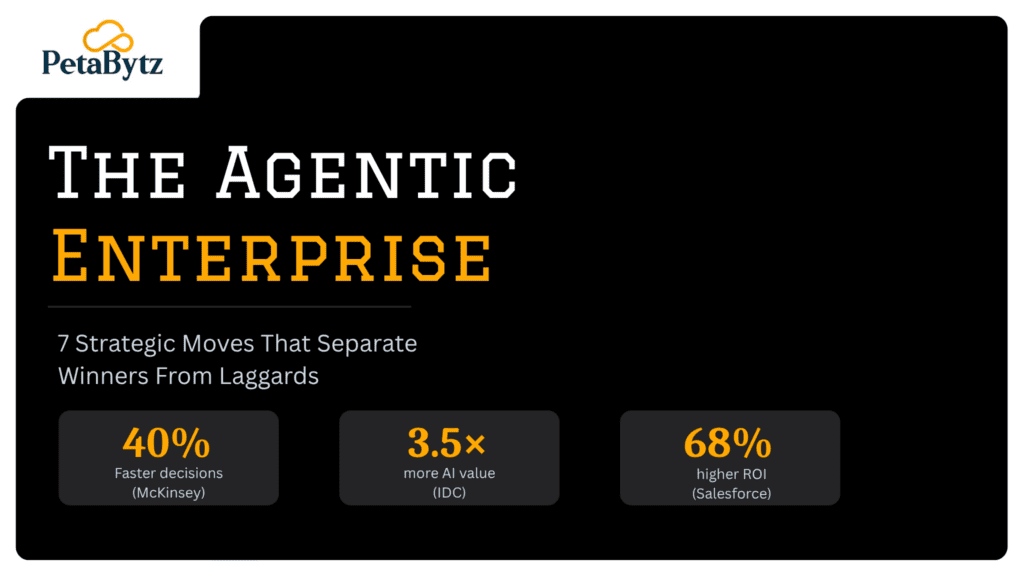
Recent industry studies suggest that by 2027, more than 50 percent of enterprise workflows will involve autonomous decision support. Companies using advanced agentic ai frameworks are already seeing productivity improvements of 20 to 40 percent in operations teams.
These systems combine reasoning models, planning engines, and execution capabilities into a unified architecture.
Key advantages
- Continuous operation without fatigue
- Real time adaptation to changing conditions
- Reduced dependence on manual intervention
- Improved accuracy in complex decisions
- Faster response to disruptions
Forward looking leaders recognize that agentic ai frameworks are not optional upgrades but foundational infrastructure for digital enterprises.
From Automation to True Autonomy: The Enterprise Shift
Automation completes predefined tasks. Autonomy pursues goals. This distinction is crucial when evaluating transformation initiatives.
An agentic ai framework enables systems to observe data, evaluate options, and take action toward objectives. This is where ai agents for enterprise begin to deliver tangible value.
Autonomous systems move beyond task execution to outcome optimization.
Key operational improvements
- Dynamic workflow orchestration
- Cross system coordination
- Intelligent exception handling
- Self optimization over time
- Reduced operational friction
Enterprises adopting agentic ai frameworks move from reactive operations to proactive performance management.
How AI Agents for Enterprise Transform Daily Operations
The practical impact of ai agents for enterprise appears across departments including IT, finance, supply chain, and customer support.
These agents act as digital operators that can monitor systems, detect anomalies, and initiate corrective actions.
Multiple agents can collaborate within a single agentic ai framework, each responsible for specific tasks.
Common use cases
- Automated procurement decisions
- Predictive maintenance scheduling
- Financial anomaly detection
- Customer service resolution
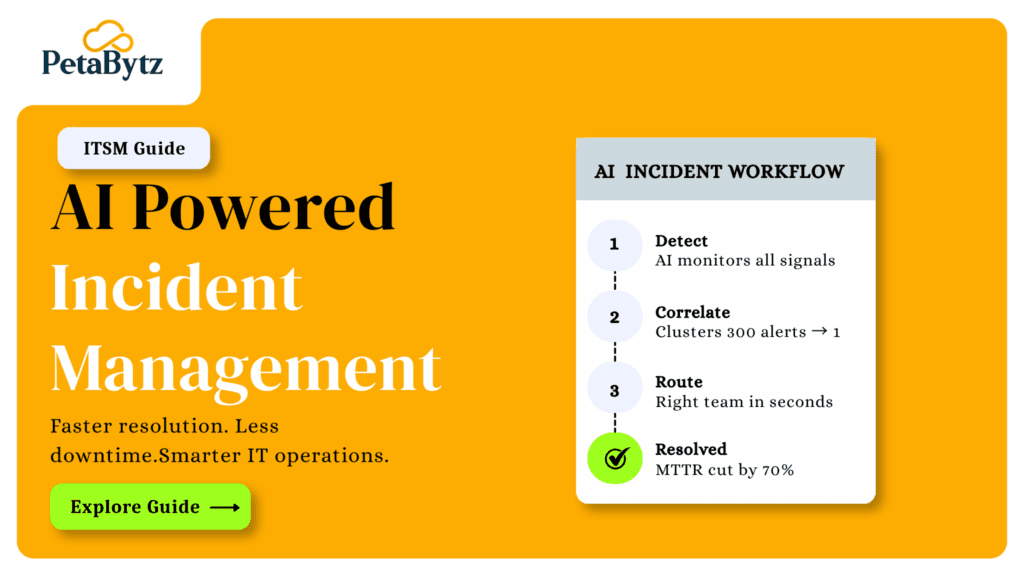
- IT incident response
By deploying coordinated agents, organizations create operational ecosystems rather than isolated tools.
Agentic AI Examples That Demonstrate Real Business Value
Many leaders ask for concrete agentic ai examples before investing. Real world deployments show measurable outcomes.
Autonomous systems excel in environments where speed and complexity intersect.
Notable examples
- Supply chains that reroute logistics automatically
- IT systems that resolve incidents without human input
- Marketing platforms that adjust campaigns in real time
- Financial systems that detect fraud instantly
- HR platforms that optimize workforce allocation
These agentic ai examples demonstrate that autonomy is already delivering a competitive advantage across industries.
How to Build an AI Agent for Enterprise Use
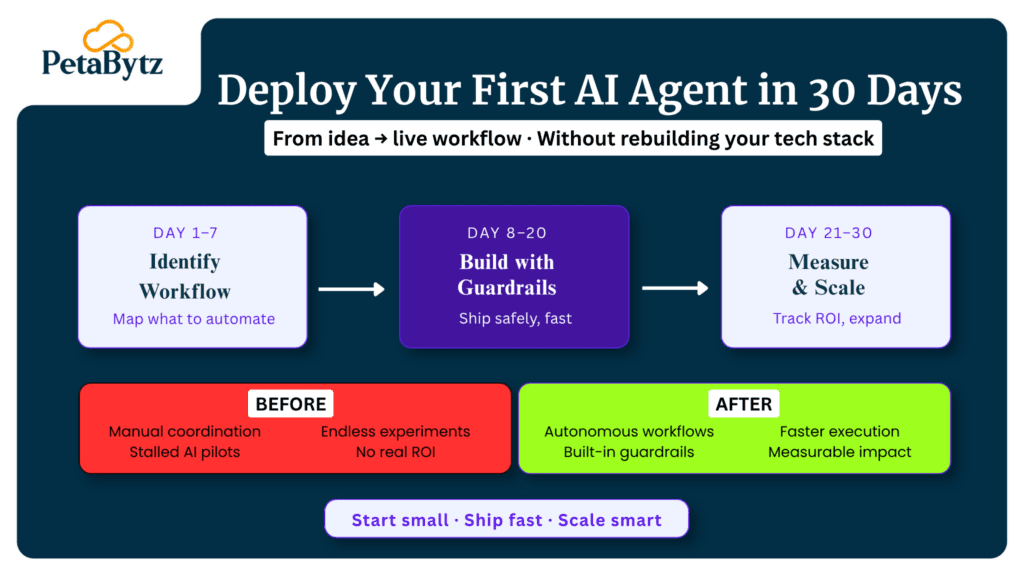
Understanding how to build an ai agent is essential for organizations exploring adoption. Development requires more than training a model. It involves architecture, governance, and integration.
A robust agentic ai framework defines how agents perceive information, make decisions, and execute actions safely.
Core components
- Data ingestion pipelines
- Decision models and reasoning engines
- Action interfaces to enterprise systems
- Monitoring and feedback loops
- Governance controls
Organizations that invest in structured agentic ai frameworks ensure scalability, reliability, and accountability.
Strategic Implications Highlighted in AI Agent News
Recent ai agents news coverage reflects growing enterprise adoption. Major technology firms are investing heavily in autonomous systems to enhance productivity and reduce operational costs.
Industry analysts predict that agent based architectures will become the dominant model for enterprise software.
Key trends reported in ai agent news
- Expansion of multi agent ecosystems
- Integration with cloud platforms
- Stronger governance requirements
- Increased focus on explainability
- Rapid vendor innovation
Staying informed through ai agents news helps leadership teams anticipate shifts before competitors do.
Governance and Risk Management in Agentic AI Frameworks
Autonomy introduces new responsibilities. Organizations must ensure decisions remain aligned with policies, regulations, and ethical standards.
Governance mechanisms are embedded directly into modern agentic ai frameworks.
Essential controls
- Role based access management
- Audit trails for decisions
- Human oversight checkpoints
- Compliance monitoring
- Security safeguards
Well-governed agentic ai frameworks deliver autonomy without sacrificing accountability.
Why Enterprises Choose PetaBytz Technologies Inc for Agentic AI Implementation
At PetaBytz Technologies Inc, we design and deploy enterprise grade agentic ai frameworks tailored to operational needs. Our approach focuses on measurable outcomes rather than experimental pilots.
We combine strategic consulting, architecture design, system integration, and continuous optimization.
Key service capabilities
- AI readiness assessment
- Custom agent architecture design
- Integration with existing platforms
- Security and governance implementation
- Ongoing performance tuning
Our goal is to transform autonomy from concept into reliable operational capability.
The Future of Enterprise Operations Is Autonomous
Agentic systems will increasingly coordinate complex activities across organizations. Teams will focus on strategy while intelligent systems handle execution.
Enterprises that adopt agentic ai frameworks early gain compounding advantages as systems learn and improve over time.
Expected long term benefits
- Sustainable productivity growth
- Reduced operational risk
- Faster innovation cycles
- Improved customer experience
- Stronger competitive positioning
Autonomy is not about replacing humans. It is about amplifying organizational capability.
If your organization is exploring how agentic ai frameworks can transform operations, now is the time to act. PetaBytz Technologies Inc helps enterprises move from experimentation to production ready autonomous systems that deliver real business value.
Contact us today to design and deploy agentic AI solutions tailored to your strategic goals.
Contact Us
Website: www.petabytz.com
Email: info@petabytz.com
Frequently Asked Questions (FAQ’s)
 INDIA
INDIA
 USA
USA CANADA