Best practices to improve your AI voice bot results
An AI voice bot performs exactly as well as the system around it. Here’s how to set it up right.
- Clean your contact data before upload
Remove duplicates, validate phone numbers, and add name fields before you upload. A clean sheet means higher connection rates and better personalization in the opening line.
- Write your script with objections in mind
Your local AI voice bot needs mapped responses for common pushbacks: “I’m busy,” “Send me a message,” “Not interested.” Build each branch intentionally. The more objection paths you map, the higher your qualification rate.
- Match the language to the audience
If you’re calling across India, enable multilingual auto-detection. An AI voice bot that greets someone in Tamil instead of Hindi gets a far warmer response. Language fluency builds instant trust.
- Use intent scores to prioritize your human team’s time
Every call produces an intent score. Route contacts above 70 directly to a closer. Put 40–69 in a nurture sequence. Below 40 gets removed. Your AI customer support agent surfaces the signal. Your team acts on it.
- Review sentiment trends weekly, not monthly
Your AI voice bot logs positive, neutral, and negative sentiment on every call. If you see negative trending up, your script needs updating. Catch it weekly before it tanks your campaign.
- Always trigger an immediate post-call SMS
Don’t wait for a human to send the follow-up. Configure your conversational AI voice bot to auto-trigger a personalized SMS the moment the call ends. This single habit alone can push response rates up by 30–40%.
How PetaBytz can help you deploy an AI voice bot that actually works
Here’s the real problem most sales teams face: they don’t lack ambition. They lack capacity.
You have 5,000 leads and four reps. Even with perfect execution, most of those leads go cold. You can’t hire your way out of this. The math doesn’t work.
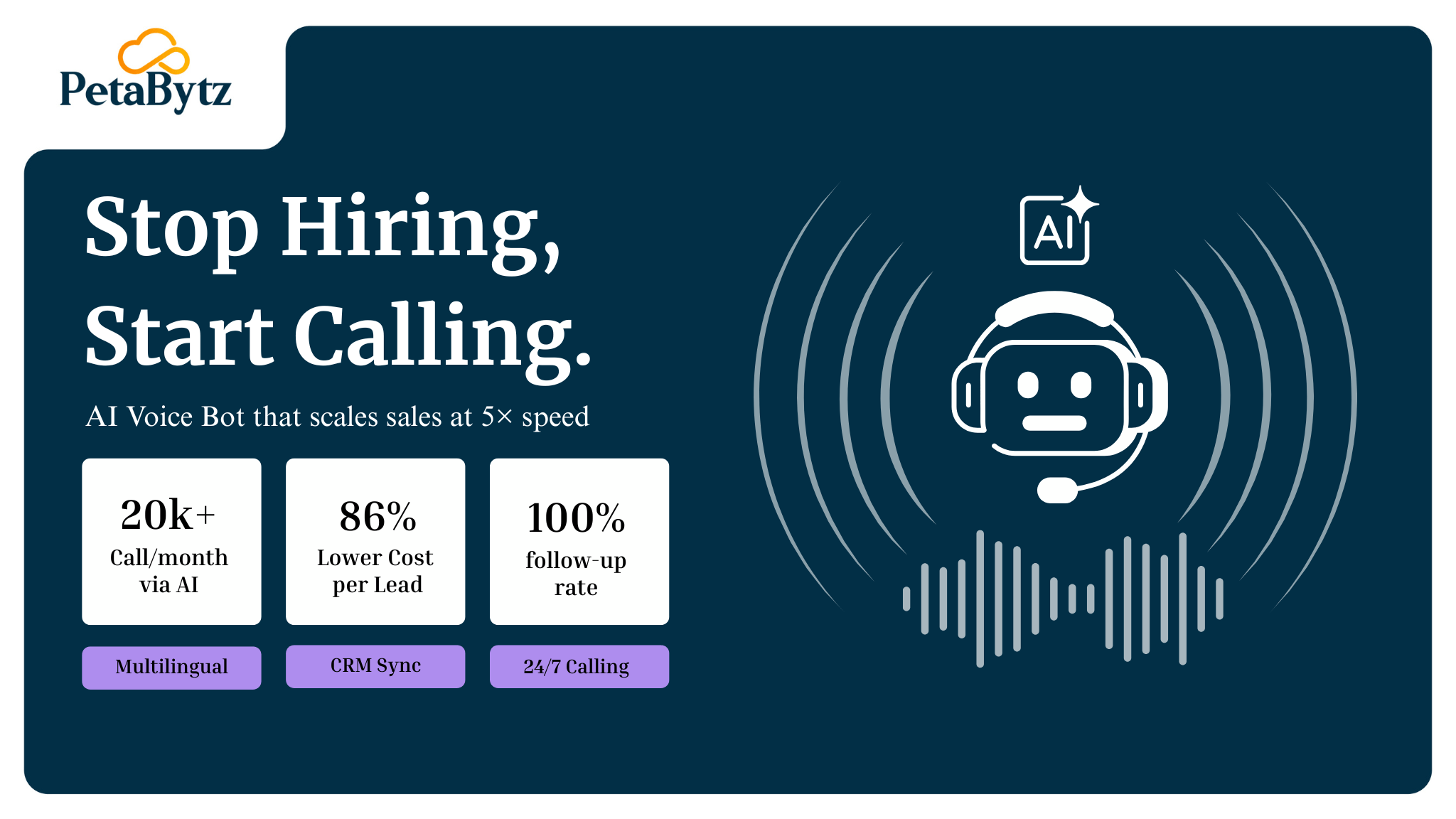
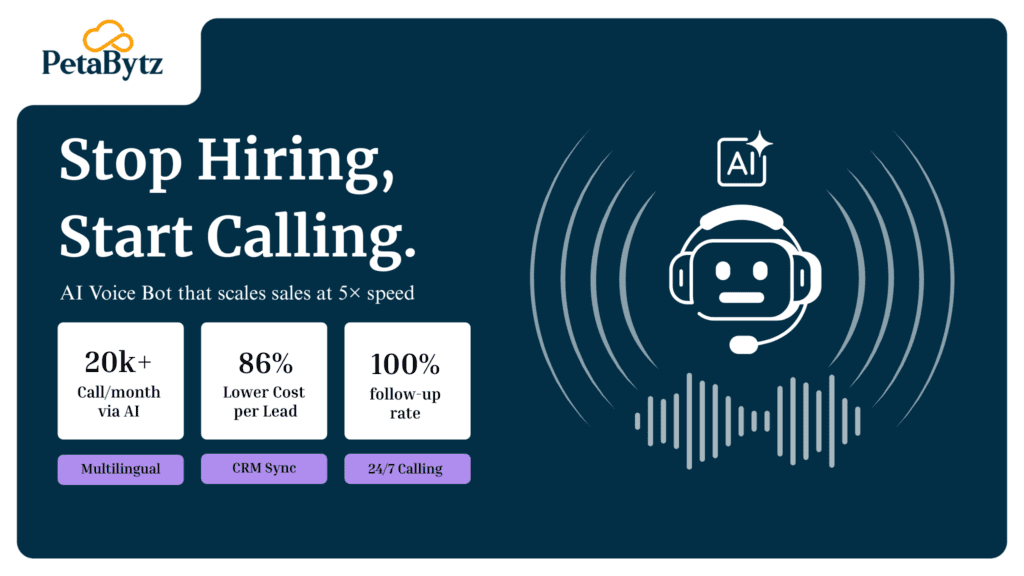
An AI voice bot changes the equation. It runs 7 parallel lines simultaneously. It calls 20,000+ contacts a month. It speaks five Indian languages. And it costs 86% less per qualified lead than a manual team.
That’s where PetaBytz comes in. Our AI voice bot platform is built specifically for the Indian enterprise market. You upload a contact sheet. We handle everything else — dialling, conversations, qualification, SMS follow-up, CRM sync, and insight reporting.
Teams go live in 4–6 weeks. Setup pays back in under 3 months. The AI voice bot runs 24/7. Your team only deals with warm leads — the ones already qualified and interested.
This is what a modern AI agent for customer support and outbound sales looks like when it’s done right.
Conclusion: You don’t need more agents. You need smarter infrastructure.
You don’t need to overcomplicate this. The technology exists. The results are proven. What’s left is the decision.
An AI voice bot isn’t a replacement for your team. It’s the upgrade that makes your team extraordinary. It removes the grind of cold calling so your reps can do what they’re actually good at — building relationships and closing deals.
Every lead gets called. Every follow-up goes out. Every conversation gets logged. That’s the kind of consistency no human team can match — and the kind that compounds into a real competitive edge.
PetaBytz is ready to show you exactly how this works for your business. Book a free demo at petabytz.com/ai-voice and see an AI voice bot handle a real call in your language, with your script, live.
 INDIA
INDIA
 USA
USA CANADA