PetaBytz

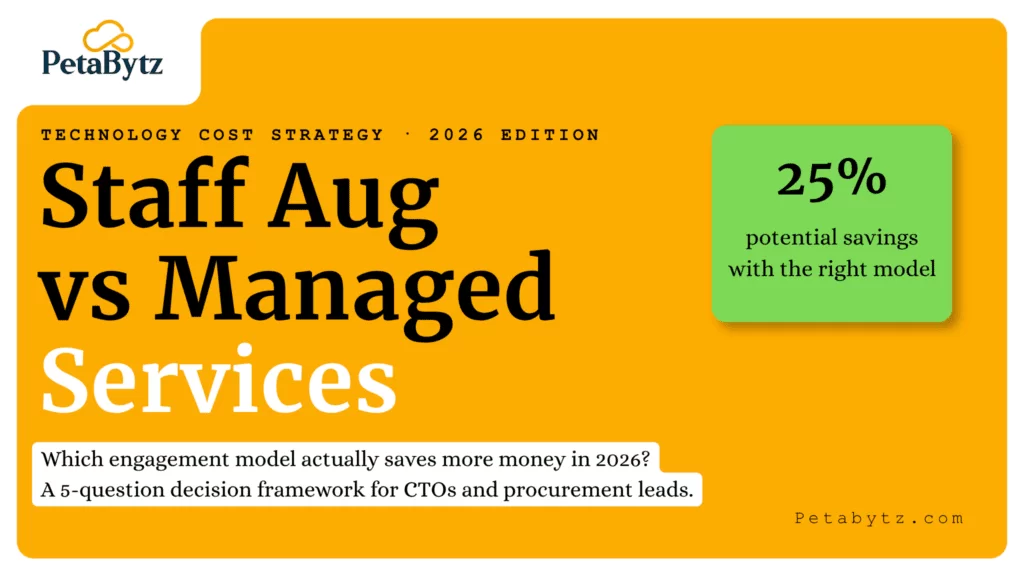
Staff augmentation vs managed services: which model saves more in 2026?

29/04/2026

Your last vendor contract looked great on paper. Then the invoices came and none of the line items matched what you actually needed.

Sound familiar? You’re not alone. CTOs and procurement leads across mid-size tech companies are stuck between two engagement models and picking the wrong one costs real money.

Here’s the truth: the staff augmentation vs managed services debate isn’t about which model is better. It’s about which model fits your stage, your team, and your budget right now.

In this guide, you’ll learn:

  • What staff augmentation and managed services actually mean
  • The real cost comparison – beyond hourly rate cards
  • A 5-question decision framework to choose the right model
  • When a hybrid approach makes more sense than either model alone
  • Best practices to maximize savings in 2026
staff augmentation

Contact us now

Staff Aug Vs Managed Services: which saves more in 2026?

Defining the two models clearly

Let’s cut the noise. Both models get confused because vendors pitch them interchangeably. They’re not the same.

What is staff augmentation?

Staff augmentation means you hire skilled, on-demand talent that works directly under your direction. The augmented engineers use your tools, follow your processes, and report to your team leads. You own the workflow. You own the output.

IT staff augmentation is ideal when your core team needs to scale fast — without the delay of full-time recruitment. You bring in a React developer for a sprint or a cloud engineer for a migration. You stay in control. The engagement ends when the work ends.

What are managed services?

Managed services work differently. You hand over an entire function — say, infrastructure monitoring or QA — to an external vendor. They own the outcome. They define the process. You pay for the result, not the hours.

This model transfers delivery risk. But it also transfers control. Neither model is inherently better — the fit depends entirely on context.

The real cost comparison in 2026

Stop comparing rate cards. They tell you almost nothing. The real cost of any engagement model includes several hidden layers.

What to factor into your true cost calculation

  • Onboarding time: IT staff augmentation typically requires 1–2 weeks to ramp. Managed services may need 4–8 weeks for transition and knowledge transfer.
  • Management overhead: With staff augmentation, your team leads spend time coordinating. With managed services, that burden shifts to the vendor — but so does visibility.
  • Hidden coordination costs: SLA reviews, escalation paths, reporting cadence — managed services generate their own operational load.
  • Time-to-productivity: An augmented engineer embedded in your codebase often ships faster than a managed team learning your domain.
  • Contract flexibility: Staff augmentation contracts are typically month-to-month. Managed services often lock you into 12–24 month agreements.

Scenario-based cost model: 6 months, 3 engineers

Suppose you need three mid-level engineers for a 6-month product build. Here’s a simplified comparison:

Staff augmentation model:

  • Blended rate: $55–$75/hour per engineer
  • Total 6-month estimate: $130,000–$175,000
  • Management time: ~15% of a tech lead’s bandwidth
  • Ramp cost: Low — 1–2 weeks

Managed services model:

  • Project-based fee: $160,000–$220,000
  • Transition overhead: 4–8 weeks of onboarding
  • Governance time: Regular SLA reviews and reporting
  • Contract flexibility: Often locked in for the full term

For a defined, evolving product sprint, staff augmentation services typically save 15–25% over managed services. But for repeatable, non-core functions — managed services can save more over a 2–3 year horizon.

Decision framework: 5 questions to ask before you choose

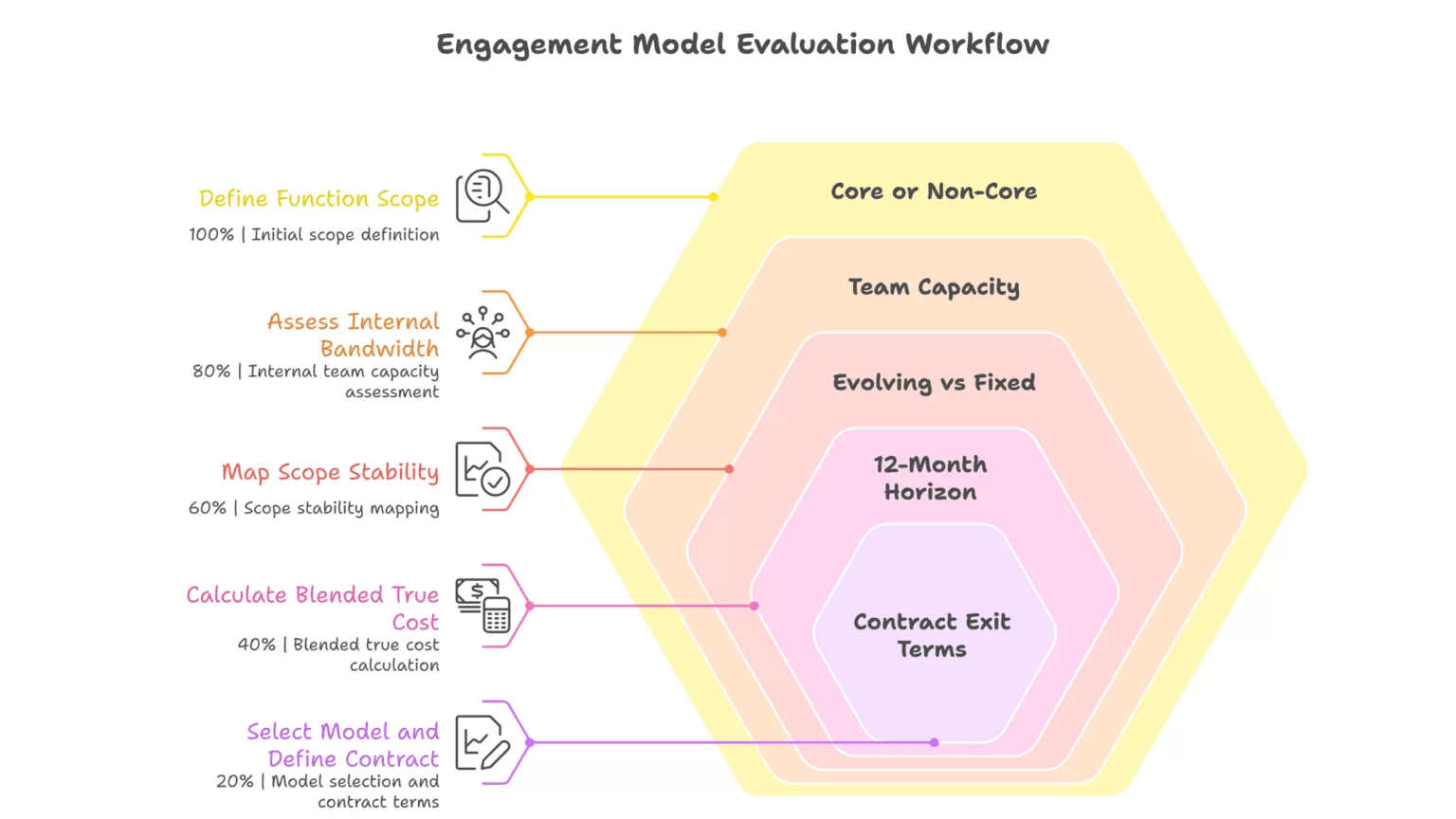
Before you sign anything, answer these five questions. Each one maps to a model recommendation.

  1. Do you have internal bandwidth to manage this team? If yes — staff augmentation works. You direct the talent, own the process. If no — managed services might be safer.
  2. Is the scope fixed or evolving? Evolving scope favors IT staff augmentation. You can adjust team composition sprint to sprint. Fixed scope suits managed services.
  3. Do you need IP ownership? If your product code must stay in-house, staff augmentation gives you full ownership. Managed services may complicate IP clauses.
  4. How fast do you need to reach capacity? Staff augmentation gets you there in days. Managed services need weeks of onboarding before you see output.
  5. Is this a core or non-core function? Core product work belongs under your direct control — use staff augmentation. Non-core functions like infra monitoring or payroll processing are safe to hand off via managed services.

When to combine both: the hybrid model

Here’s what most vendors won’t tell you. Many mature engineering organizations run both models simultaneously.

They use staff augmentation for product development — where speed, control, and skill-fit drive output. And they use managed services for infrastructure, QA, or security — where defined outcomes matter more than daily oversight.

This hybrid approach isn’t a compromise. It’s a deliberate cost strategy. You’re not forcing a single model onto every problem. You’re matching the engagement model to the function.

What governance looks like in a hybrid setup

  • Augmented engineers sit inside your sprint cycles and attend standups
  • Managed service teams operate on SLA-driven reporting cadence
  • Separate escalation channels for each engagement type
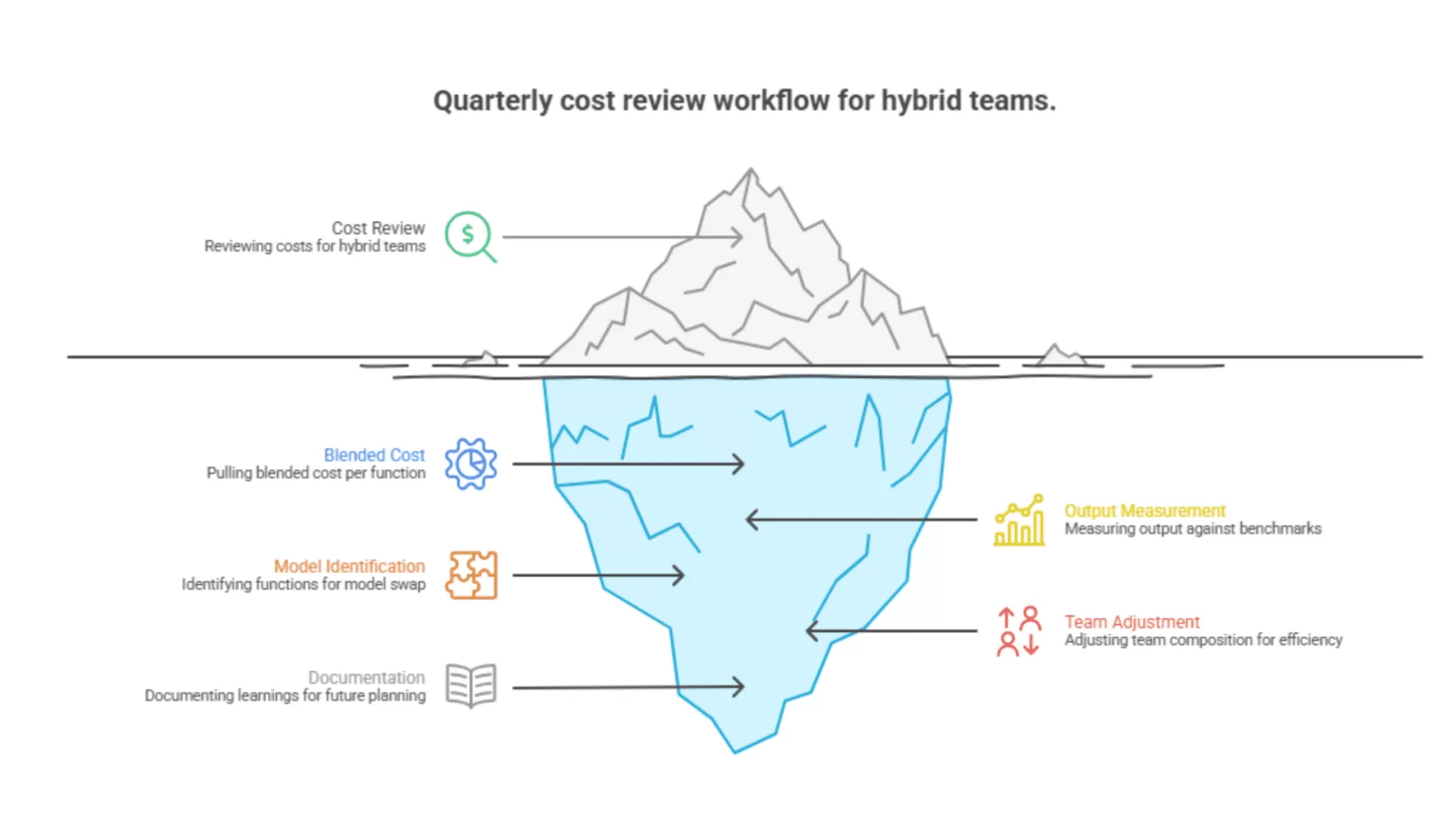
  • Budget owners track blended cost per function, not per vendor

Key elements of a smart engagement model in 2026

Whether you go with staff augmentation, managed services, or a hybrid — five core elements separate cost-efficient engagements from expensive ones.

  1. Skill-role precision

Vague job descriptions lead to mismatched hires. In IT staff augmentation, specificity saves money. Define the stack, the seniority level, and the sprint goals before outreach.

  1. Defined ownership boundaries

Every engagement — staff augmentation or managed — needs clear ownership of decisions, code, and accountability. Ambiguity here is where budget overruns begin.

  1. Flexible exit terms

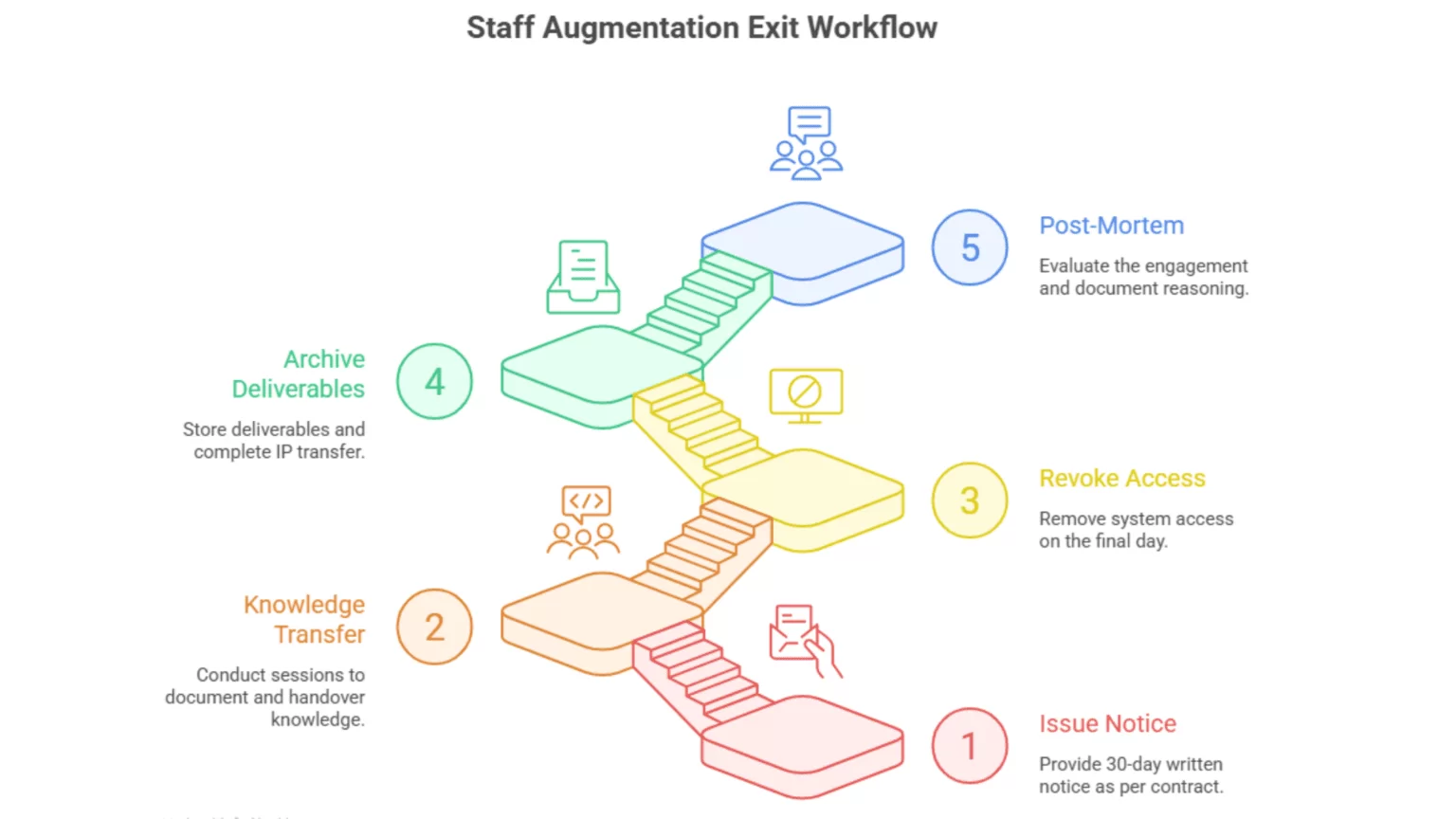
Market conditions shift. Project scopes change. Ensure your IT staff augmentation services contract includes notice periods no longer than 30 days and no penalties for scope reduction.

  1. Time-to-productivity SLAs

A good IT staff augmentation company guarantees productive contribution within two weeks. Ask for this in writing. Measure it.

  1. Transparent cost breakdown

Avoid bundled pricing. Demand line-item visibility — management fees, tooling costs, and communication overhead included. What you can see, you can optimize.

  1. Cultural and communication fit

Time zone alignment and communication style matter in staff augmentation more than most teams expect. A developer four time zones away with poor async habits will slow down your sprint velocity.

Workflow orchestration Examples

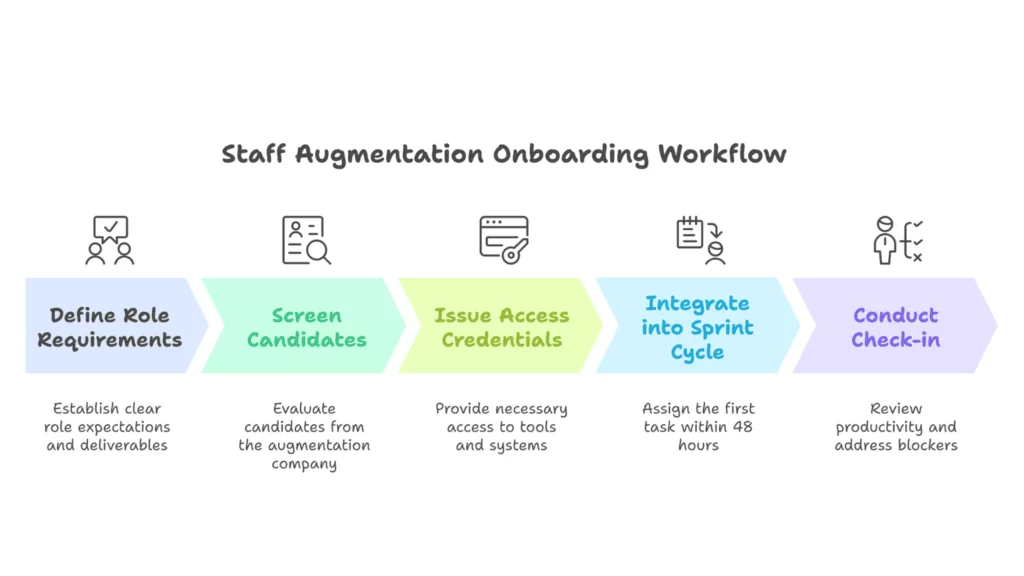
 1: Staff augmentation onboarding workflow

2: Engagement model evaluation workflow

3: Quarterly cost review workflow (hybrid teams)

4: Staff augmentation exit and transition workflow

Real examples of engagement models that worked

Example 1: SaaS startup, 8-engineer team, 4-month product sprint

A B2B SaaS company needed three senior React engineers urgently to ship a new dashboard before their enterprise sales cycle opened. Full-time hiring would take 6–8 weeks. Instead, they engaged an IT staff augmentation company and had developers contributing within 10 days. The sprint shipped on time. The engagement ended cleanly. Total cost: $72,000 — versus an estimated $110,000 for a managed dev pod.

Why it worked: Evolving scope, strong internal tech leads, and speed-to-market pressure made staff augmentation the obvious fit.

Example 2: Mid-market fintech, infrastructure monitoring handed to managed services

A 150-person fintech company was spending 20% of their engineering team’s time managing cloud infrastructure alerts and incident response. They moved this function to a managed services provider under a defined SLA. Internal engineers regained 12 hours per week — redirected to core product work. Managed cost was higher on paper but net savings across internal time recaptured exceeded $95,000 annually.

Why it worked: Non-core function, fixed outcome, willingness to pay for delivery risk transfer.

Example 3: Enterprise software firm runs a hybrid model

A 400-person software company runs staff augmentation for their three product squads — using IT staff augmentation services to scale developers up and down per quarter. Simultaneously, they use a managed services provider for security operations and cloud cost optimization. Neither model competes. Both serve different functions with different oversight needs.

Why it worked: Deliberate model-to-function matching. No blanket vendor relationship.

Best practices to improve cost savings in 2026

  1. Audit before you engage. Know exactly which functions need direct control and which can run independently. This audit is the foundation of your model selection.
  2. Negotiate short ramp windows. Whether using staff augmentation services or managed services, define productivity milestones in the contract. Week 1, week 2, week 4. Hold vendors accountable.
  3. Avoid over-scoped managed services contracts. Vendors will upsell scope. Define only what you need now. Add scope in amendments — not in the original agreement.
  4. Build an IT staff augmentation bench. Maintain relationships with 2–3 pre-vetted IT staff augmentation companies so you can activate talent within days — not weeks — when demand spikes.
  5. Review quarterly, not annually. The right engagement model in Q1 might be wrong in Q3. Set a 90-day review cadence to assess blended cost per function and adjust.
  6. Track output per dollar, not hours per dollar. In staff augmentation, measure sprint velocity and feature delivery. In managed services, measure SLA adherence and incident resolution time. Hours are a proxy. Output is the real metric.

How staff augmentation services solve your real problem

The pain isn’t choosing between models. The pain is choosing the wrong model and then being locked into it.

Most teams don’t fail because they chose staff augmentation over managed services. They fail because they signed a contract without matching the model to the function, the stage, and the team’s maturity.

That’s where the right IT staff augmentation company changes everything. Petabytz’s staff augmentation services are built for engineering teams that need fast, flexible, skilled talent — without the overhead of long managed service transitions or the delay of full-time recruiting.

Petabytz specializes in IT staff augmentation services that integrate directly into your sprint cycles. Vetted engineers, clear IP ownership, and month-to-month flexibility — so you stay in control of cost, quality, and delivery.

Not sure which model fits your roadmap? Petabytz advisors run a free 30-minute engagement model assessment — no pitch, just clarity. Book your session today.

Conclusion

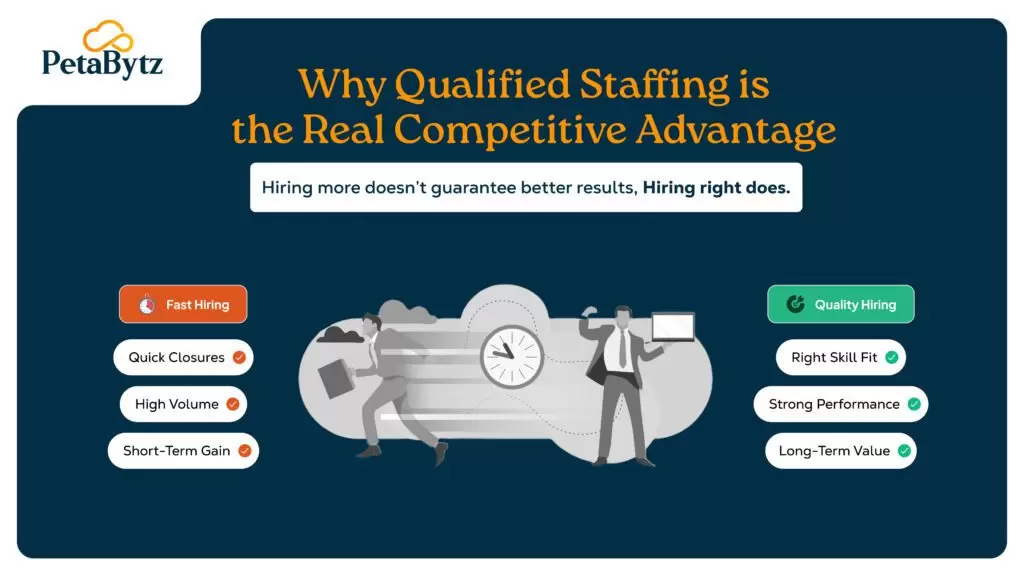
You don’t need to overcomplicate this. Staff augmentation wins when speed, control, and skill-fit drive your decision. Managed services win when you want a defined outcome and you’re willing to pay for delivery risk transfer.

The best organizations in 2026 aren’t picking one model for everything. They’re matching the model to the function, auditing quarterly, and staying flexible enough to switch when the context changes.

Start with the five-question framework. Run the true cost comparison. And if you want an expert to walk you through it — Petabytz is one conversation away.

Website: www.petabytz.com
Email: info@petabytz.com

Frequently Asked Questions (FAQ’s)

Q1: What is staff augmentation and how does it work?

Staff augmentation is a hiring model where you bring in skilled external talent that works under your direct management. The augmented staff uses your tools, follows your processes, and delivers within your project structure. You control the outcome. The engagement ends when the need ends — no long-term commitment required.

Q2: When should I choose staff augmentation vs managed services?

Choose staff augmentation when you have internal bandwidth to manage talent, need flexibility, and want full IP ownership. Choose managed services when the function is non-core, the scope is fixed, and you want to transfer delivery risk to a vendor. Use both when your org has diverse functions at different maturity levels.

Q3: Is IT staff augmentation cheaper than hiring full-time?

For short-to-medium term needs, yes. IT staff augmentation eliminates recruitment costs, benefits overhead, and onboarding delays. For roles needed longer than 18–24 months, a full-time hire often becomes more cost-effective. Staff augmentation is best for surge capacity, specialized skills, and project-based work.

Q4: What should I look for in an IT staff augmentation company?

Look for transparent pricing, pre-vetted talent pools, time-to-productivity guarantees, and flexible contract terms. A reliable IT staff augmentation company will offer month-to-month flexibility, clear IP transfer clauses, and the ability to replace resources quickly if the fit isn't right.

Recent Posts